How U.S. Brands Can Win in Latin America's $335B E-Commerce Market: 6 Expansion Strategies from Pattern, Spin Master & EMARKETER
.webp)
Latin America is the fastest-growing retail e-commerce market in the world — and it will stay that way through 2028, according to EMARKETER. By the end of the decade, the region will be worth more than $335 billion in online sales, with more than 500 million consumers across Brazil, Mexico, Argentina, Colombia, Chile, and beyond.
For U.S. brands, that growth is the easy part. The hard part is figuring out how to actually win in a region that's anything but homogeneous — where the volatility is real, the regulations shift overnight, and the consumer behaves differently in São Paulo, Mexico City, and Buenos Aires.
At the third edition of Unlock LatAm, held on May 12, 2026, in New York City, three leaders sat down to talk about exactly that:
- Ana Pereira, Former VP Latin America, Spin Master
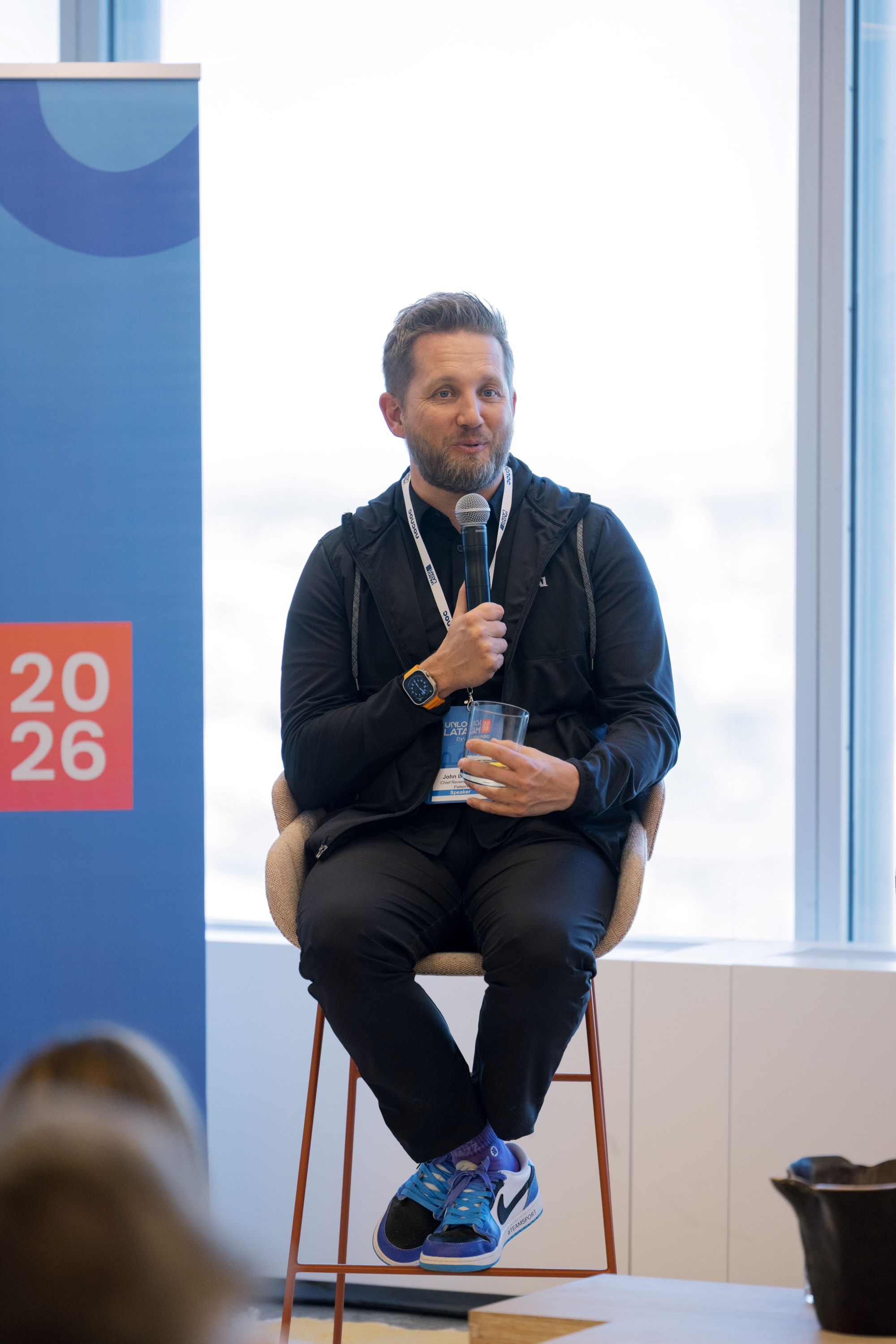
- John LeBaron, CRO, Pattern
- Matteo Ceurvels, Principal Analyst, Latin America & Spain, EMARKETER
What follows is a distilled playbook from that conversation: six expansion strategies U.S. brands can apply right now to build a profitable, defensible Latin America business.
1. Start with Data, Not a Mandate
The single biggest mistake brands make when they move into Latin America isn't a tactical one — it's strategic. They go in because someone at HQ pointed at a map.
“I think data really informs a strategy, and sometimes you have a broad remit of like, 'We got to get into LatAm.' But where did that mandate come from? And what do we actually need to be successful?” - John LeBaron, CRO, Pattern
Before any of the operational questions get answered, the data has to. According to LeBaron, that means looking past topline market size and into the variables that actually decide outcomes: regulatory hurdles by category, e-commerce penetration, gross merchandise volume (GMV) flowing through your specific vertical, competitive dynamics, fulfillment infrastructure, tax exposure, and whether the market is fractured or already dominated by one player.
“Sometimes it's better to just double down in the US. Sometimes it's better to go to Canada. Sometimes it's better to go to Germany. LatAm is growing very, very quickly — there is tremendous opportunity, but there is also tremendous risk if you don't know what you're doing.” - John LeBaron
The takeaway: don't enter Latin America to satisfy a board slide. Enter because the data says your category, your price point, and your operating model can win there.
That principle was echoed across the room throughout the day. Pamela Scheurer, CEO and co-founder of Nubimetrics — one of the gold sponsors of Unlock LatAm 2026 — put it this way:
"Unlock LATAM reinforced something very important: Latin America is full of opportunities for companies willing to understand the region beyond assumptions. One of the strongest takeaways from the event was how critical the right market intelligence is to make strategic decisions with confidence instead of moving blindly. The opportunity is enormous, but capturing it successfully requires the right local partners, strong operational execution, and a deep understanding of each market's unique dynamics." - Pamela Scheurer, CEO & Co-Founder, Nubimetrics
2. Treat Latin America as Five Markets, Not One
The phrase "Latin America" hides one of the region's most important truths: there is no Latin American consumer. There is a Brazilian consumer, a Mexican consumer, an Argentine consumer, a Colombian consumer — and each one shops, pays, and discovers products differently.
Ana Pereira, who spent 15 years scaling Spin Master across the region, recommends building a country roadmap before touching marketing or logistics.
“Brazil is the hardest, with all the requirements and all the laws and tariffs. But it's bigger, it's rewarding. So Brazil is the one that we try to go first, and Mexico as well. After that, we followed Argentina and then Colombia. So we create a road map — and this road map has to have a very specific product for a very specific customer, and then the country afterwards.” - Ana Pereira, Former VP Latin America, Spin Master
Even within countries, the segmentation goes deeper. Mexico City behaves nothing like the border states. São Paulo behaves nothing like the Northeast of Brazil. Buenos Aires behaves nothing like the rest of Argentina. The brands that win adapt assortment, pricing, and even creative by region — not just by country.
3. Product Differentiation Beats Translation
A decade ago, "localization" mostly meant translating product copy. That bar has moved.
“Back in the day everybody was talking about, 'let's do translations, let's do localization.' And I wish then I knew that there is much more than that. There is the value the consumer gives to the product, the attachment, the emotional connection, the trends — that makes a product more successful than it was before.” - Ana Pereira
Pereira's point: the brands that win in Latin America don't just translate a U.S. product into Portuguese or Spanish — they earn an emotional connection with a passionate consumer base. And the foundation of that connection is product differentiation.
“Is your product different? Is your product going to make a difference? You have to use analytics to see how different you are — or you're just a me-too. And if you're me-too, how are we going to get there?” - Ana Pereira
LeBaron agreed, with a warning about the lazy approach: dropping a U.S. SKU into LatAm and hoping it sticks.
“You have a bunch of US brands that went down and just tried to peddle the same product they've been selling in Canada. 'Oh, let's just try to sell this in Brazil.' Well, it may not work. You have different skin types. The sun is very different down there. The climate is very different.” - John LeBaron
The new localization is product-level: reformulate, repackage, or reposition based on actual regional consumer feedback before you scale.
4. Lead with Marketplaces — But Build for Omnichannel
Direct-to-consumer is a punishing place to start in Latin America. Customer acquisition costs are high, awareness is low, and trust is built one transaction at a time. That's why almost every successful U.S. brand in the region uses marketplaces as the front door.
“Marketplaces are that natural — how do I reach the largest markets with the lowest investment and the broadest coverage? Marketplaces will be that.” - John LeBaron
But marketplaces alone aren't enough. Pereira pushed hard on the omnichannel reality of the Latin American consumer.

“I believe it is a combination between brick-and-mortar and e-commerce, if you can. The experience in Latin America is still very valuable. The consumer likes to go to activities and feel and experience the product first-hand, and then go back and buy it online.” - Ana Pereira
Even Mexico, one of the most digitally advanced markets in the region, will only reach roughly 20% e-commerce penetration this year — which means 80% of retail still happens in physical stores. Brands that ignore that reality leave most of the market on the table.
Pereira's tactical answer: segment your portfolio by channel. Different SKUs or lines for different retailers (Falabella vs. Amazon vs. local marketplaces vs. Mercado Libre) so they complement instead of cannibalize.
5. Win Younger Shoppers with Social Commerce and Creators
The script for product discovery is being rewritten — and the rewrite is happening fastest in Latin America. Brazil ranks among the top markets globally for time spent on Instagram, with users averaging close to 10 hours per week on short-form social video alone.
“We're seeing a lot of digitally native brands absolutely crush this aspect all through Latin America. They came from a very dedicated and focused strategy on the social activation of incredibly vibrant, young, animated and passionate individuals that become salespeople in effect for the brand.” - John LeBaron
LeBaron's view is that creator and influencer strategies are quickly becoming the new top of the funnel — particularly for younger shoppers — and that brands that don't build a creator playbook in LatAm will lose ground to digitally native challengers and Chinese sellers who already have one.
The good news: creator marketing in Latin America doesn't have to be expensive. Pereira shared a story that proves it:
“There was an influencer in Brazil that was huge. He liked one of our products and he showed it. That product took off. We sold more Tech Decks in Brazil than anywhere else that year — and the year after that, for three years running. A lot of people I talked to with distributors say, 'We don't have money for the influencers.' You don't need money for the influencers. You just need to make a very nice package and send it to their house, and maybe they will pick up.” - Ana Pereira
Bottom line: in Latin America, organic creator seeding can outperform paid media — if your product gives them something worth posting about.
6. Reverse-Engineer the Customer with AI and Listening
The brands pulling ahead in 2026 aren't the ones with the biggest budgets — they're the ones with the tightest feedback loops. LeBaron sees real-time listening as the new competitive moat.
vvv.png)
"The crown is going to go to the products and the brands that understand the concept of social listening — and getting feedback, or preemptively divining feedback through reverse-engineering. Use AI to go into all the different Instagram channels or sponsored ads, or even go into the search data on the marketplaces themselves to figure out: what do people not like?” - John LeBaron
That iterative posture — "go in humble, assume you'll get the first version wrong, listen, change the product" — is the opposite of how most U.S. brands enter international markets. And it's exactly the posture Latin American consumers reward.
Pereira added the next frontier of this loop: AI-driven marketing personalization in real time.
“I can't wait to see AI together with marketing — changing the activity, the marketing delivery for the consumer by the minute. They see the consumer behavior, they change the marketing tomorrow. Together with the content. I'm so excited about that.” - Ana Pereira
The Quiet Story: Logistics Is Finally Catching Up
If creator strategy and AI are the loud trends, fulfillment is the quiet one — and LeBaron argued it may be the most important.
“One of the most exciting things that is super definitively unsexy is just fulfillment and operations and moving boxes. That is getting better and better every single day. You can have the best content, but if you can't get it to the customer, and you can't adjust returns — that to me has been one of the biggest roadblocks of really going full board into Latin America. Through partnerships and through the marketplaces themselves doubling down, it's getting better and better.” - John LeBaron
Ceurvels noted that he recently tested a 10-minute delivery promise in Mexico City and got the order in 9 minutes and 50 seconds — in traffic. The operational gap between Latin America and other emerging markets is closing faster than most U.S. brands realize.
How to Apply These Strategies to Your Brand
Looking at the six strategies as a sequence, the playbook for a U.S. brand entering Latin America in 2026 looks something like this:
- Validate with data first. Map category size, penetration, competitive set, regulation, and fulfillment infrastructure before committing.
- Build a country roadmap. Brazil and Mexico typically lead, followed by Argentina and Colombia — but the sequence depends on your category.
- Differentiate the product. Localize beyond translation; reformulate or reposition where it matters.
- Start on marketplaces. Then layer in retail and direct-to-consumer where it makes sense.
- Invest in creators early. Seed product to local voices; let user-generated content fuel marketplace conversion.
- Listen and iterate. Use AI and social listening to refine product, copy, and pricing in real time.
The opportunity is genuinely once-in-a-generation. But the brands that win won't be the ones that show up — they'll be the ones that show up prepared.
Ready to Enter Latin America?
nocnoc is the cross-border platform that lets you sell across five of Latin America's most important markets — Mexico, Brazil, Argentina, Colombia, and Chile — on 20+ leading marketplaces, in under 48 hours.
We handle product listings, translations, localized content, customer service, marketing, customs, delivery, and returns — so your team can focus on growth, not operations.
Start selling across Latin America, and watch the full panel discussion with Pattern, Spin Master, and EMARKETER on YouTube.