How U.S. Brands Can Sell in Latin America Before Chinese Marketplaces Lock In the Region: Lessons from Mercado Libre, Newegg & nocnoc
.png)
There's a quiet, asymmetric opportunity sitting just south of the U.S. border — and most American brands haven't woken up to it yet.
Latin America is the fastest-growing e-commerce region in the world, with 500+ million consumers across six core markets, deep internet penetration, mature digital payments, and an aspirational appetite for American brands. EMARKETER projects regional e-commerce sales will surpass $335 billion by 2030. At the same time, Chinese marketplaces like Shein, Shopee, and Temu are pouring investment into the region — and the brands that get there first will be the ones that own the next decade.
At Unlock LatAm 2026, hosted in New York City on May 12, 2026, four leaders sat down to make the case for moving now:
- Ilan Bajarlia, CEO & Co-Founder, nocnoc
- Karen Bruck, VP Cross Border Trade, Mercado Libre
- Anthony Chow, CEO, Newegg
- Crayton Harrison, Executive Editor for Latin America, Bloomberg News (Moderator)
This article distills the most important takeaways from that conversation — and what they mean for U.S. brands deciding whether (and how) to enter Latin America in 2026.
1. Latin America Is the Most Logical Next Region for U.S. Brands
If you're a U.S. brand evaluating Middle East, Africa, or Southeast Asia as your next international market, the math is worth running on Latin America first. Bajarlia framed it in a way that's hard to argue with:

“If you analyze the internet penetration of Latin America, the level of education, the access of internet, the access for e-commerce — these countries buy a lot. There are a lot of banking and financial services that are super well advanced, which allows the e-commerce infrastructure to be very ready. 500 million consumers. If you go to the Middle East, maybe you need to pick the Middle East and then Africa to get a broader market. LatAm by its own — it's the same continent. It's very nearby.” - Ilan Bajarlia, CEO & Co-Founder, nocnoc
Same time zone, deep digital adoption, mature payments infrastructure, hundreds of millions of consumers — and no ocean to cross. By any reasonable measure, Latin America is the most logical international expansion a U.S. brand can make in 2026.
The catch — and Bajarlia is clear about it — is that "Latin America" isn't one market:
“There are many LatAms. There is Brazil, they speak Portuguese, the culture is different. Then there's Argentina, then there's Colombia, Mexico. We're talking about LatAm as a catch-all — it's very, very different in every market.” - Ilan Bajarlia
The solution to that fragmentation isn't to wait. It's to find a partner that has already solved it.
2. The Region Is Underpenetrated — and Hungry for American Brands
The growth story in Latin America isn't just about new shoppers coming online. It's about how often the existing 500 million consumers are buying — and how much room there is for that number to grow.
“On average, Latin Americans are buying seven, eight times a year on digital platforms. That's nothing compared to the 30, 40, 50 purchases that they make here in the US, and let alone Asia, where you probably buy four, five, 10 times a day.” - Karen Bruck, VP Cross Border Trade, Mercado Libre
That gap between current LatAm purchase frequency and U.S./Asia purchase frequency is the runway. Every percentage point of catch-up represents billions of dollars in incremental orders flowing through marketplaces, payment networks, and logistics infrastructure that's improving by the quarter.
And the demand for American brands specifically is something U.S. companies rarely hear so directly from the region:
“American brands are very well known in LatAm. And they are aspirational, and we all want to get them. Those of us that are lucky to be able to travel or access those brands, it's great — but a lot of people don't. So we have to make sure we solve everything so that you can access them down south.” - Karen Bruck
The question for U.S. brands isn't whether the demand exists. It's whether they're willing to be the ones who answer it.

3. The Marketplace Landscape: Highly Fragmented, Highly Local
For U.S. brands, the structure of the marketplace ecosystem is one of the most underappreciated parts of the LatAm opportunity. Unlike the U.S. — where Amazon dominates — Latin America is genuinely fragmented across countries, channels, and consumer behaviors. Bajarlia broke it down by country share and by marketplace category.
Country share:
- Brazil and Mexico account for roughly 60–70% of regional e-commerce
- Argentina, Colombia, and Chile add another 20–25%
- The rest of the region rounds out the remaining 5–10%
But cross-border flows don't follow that exact distribution. Mexico, for example, currently tends to be larger than Brazil for cross-border specifically — mostly because of how tax and de minimis regulations have evolved.
Marketplace categories operating in the region:
- Regional marketplace leaders (most notably Mercado Libre)
- Chinese cross-border players (Shopee, Temu, Shein, AliExpress — and earlier waves like DealExtreme)
- Amazon, which is present and investing
- Strong local retailers — Magazine Luiza, Carrefour, and Americanas in Brazil; Falabella and Cencosud (Paris) in Chile; Coppel, Walmart, and Liverpool in Mexico
- Quick-commerce platforms — Rappi, Delivery Hero, Glovo, Uber Eats, Didi Now
“We want to work with the sellers and the merchants and the suppliers of the world to actually drive that fragmentation, which is complex. Customer support in different languages, shipping, customs — customs are very hard in Latin America. They are improving, but they're hard. Payments — how to take the money out is not the same as acquiring.” - Ilan Bajarlia
The takeaway for U.S. brands: there is no single channel strategy for Latin America. You can't list on one platform and expect to win — you have to build presence across multiple marketplaces, each with its own catalog standards, logistics requirements, and consumer behavior. That's exactly why aggregator platforms like nocnoc exist.
4. The Chinese Are Coming Fast — and U.S. Brands Need to Move
If there's one wake-up call from this conversation, it's this: Chinese marketplaces aren't tiptoeing into Latin America. They're charging in — and U.S. brands that wait are losing share by the month.
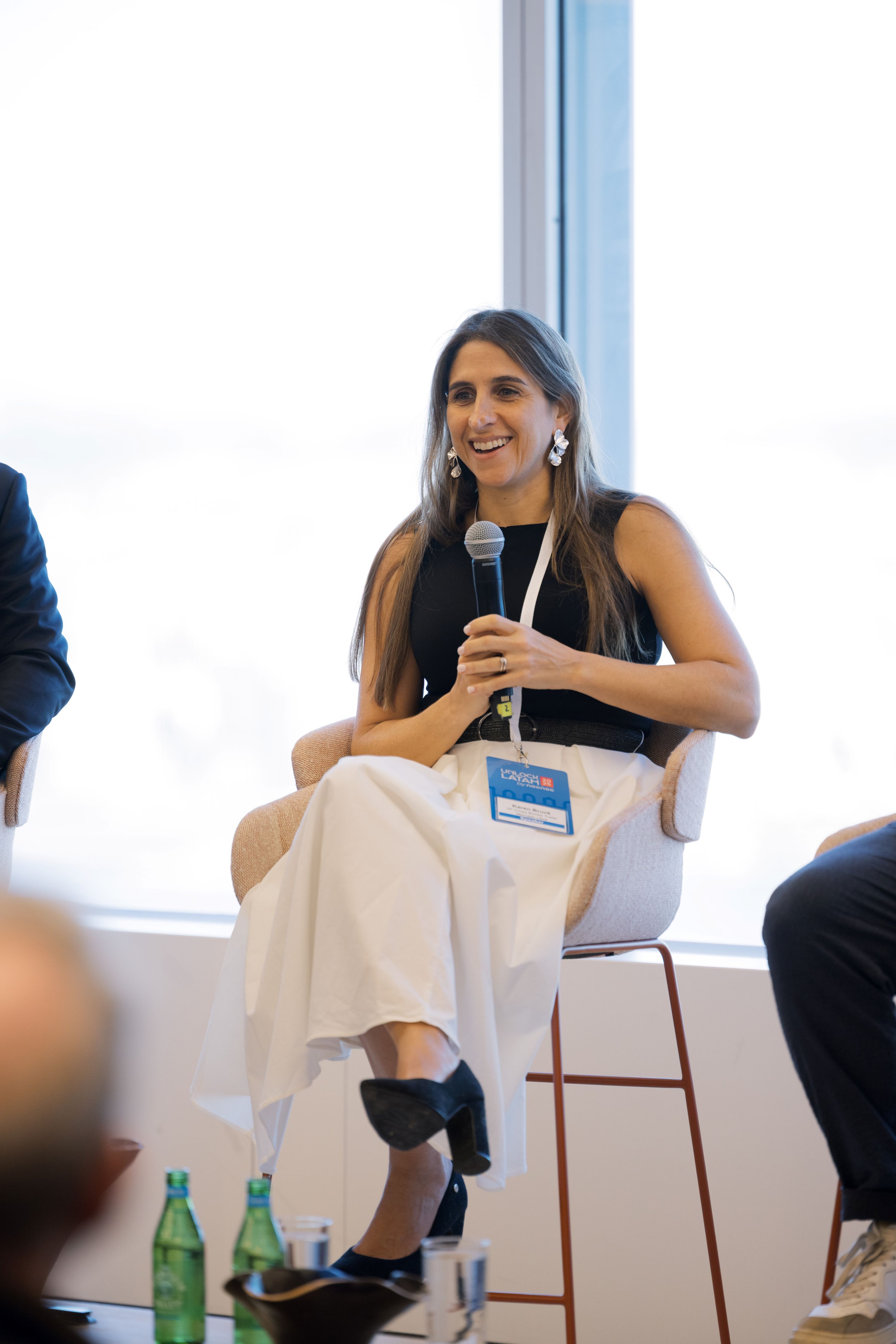
“The Chinese are targeting the region. They mean business. Brazil is hard, but the Chinese were very smart. They came with a very low-end of the pyramid — unbranded, low-ASP products. Probably people that were not even buying online yet. They got people through social media, through gamification. They got that base of the pyramid and they were able to grow fast.” - Karen Bruck
The strategic conclusion, aimed squarely at U.S. brands, was direct:
“Chinese people don't care about the complexity. They don't care about the investment. They will go and target our region. And I think that's a wake-up call for American sellers. My humble opinion is, you need to diversify out of [Amazon dependency].” - Karen Bruck
The argument: U.S. brands are over-indexed on Amazon U.S. as a single channel. Latin America offers diversification — a market full of aspirational demand for U.S. products, in a region where the easy customer-acquisition years are unlikely to last forever. Brands that move now build a defensible position before Chinese players lock in the shelf space at the top of search.
“If you have patience and try it, it's a match made in heaven, really.” - Karen Bruck
That market signal was reinforced by SmartScout — one of the gold sponsors of Unlock LatAm 2026. Zack Edgmon, Head of Enterprise Accounts at SmartScout, put it this way:
"The window in LATAM is wide open and most US brands aren't paying attention yet. Mercado Libre just posted its best quarter in four years. That's not a trend, it's a signal. Small unknown brands are quietly building real businesses down there, and the large ones who move now with the right local partners are the ones that'll own the next decade in LATAM." - Zack Edgmon, Head of Enterprise Accounts, SmartScout
Edgmon's read of the moment lines up with what Bruck and Chow described from inside the marketplaces themselves: the smallest brands are already moving in quietly, and the question is whether the larger U.S. brands move in time.
5. The Newegg Case Study: Why Most U.S. Brands Stall at the Border
The pattern Anthony Chow described at Newegg is the same pattern playing out across hundreds of U.S. brands right now. The demand is visible. The conversion isn't — because the operational barriers in Latin America are real.
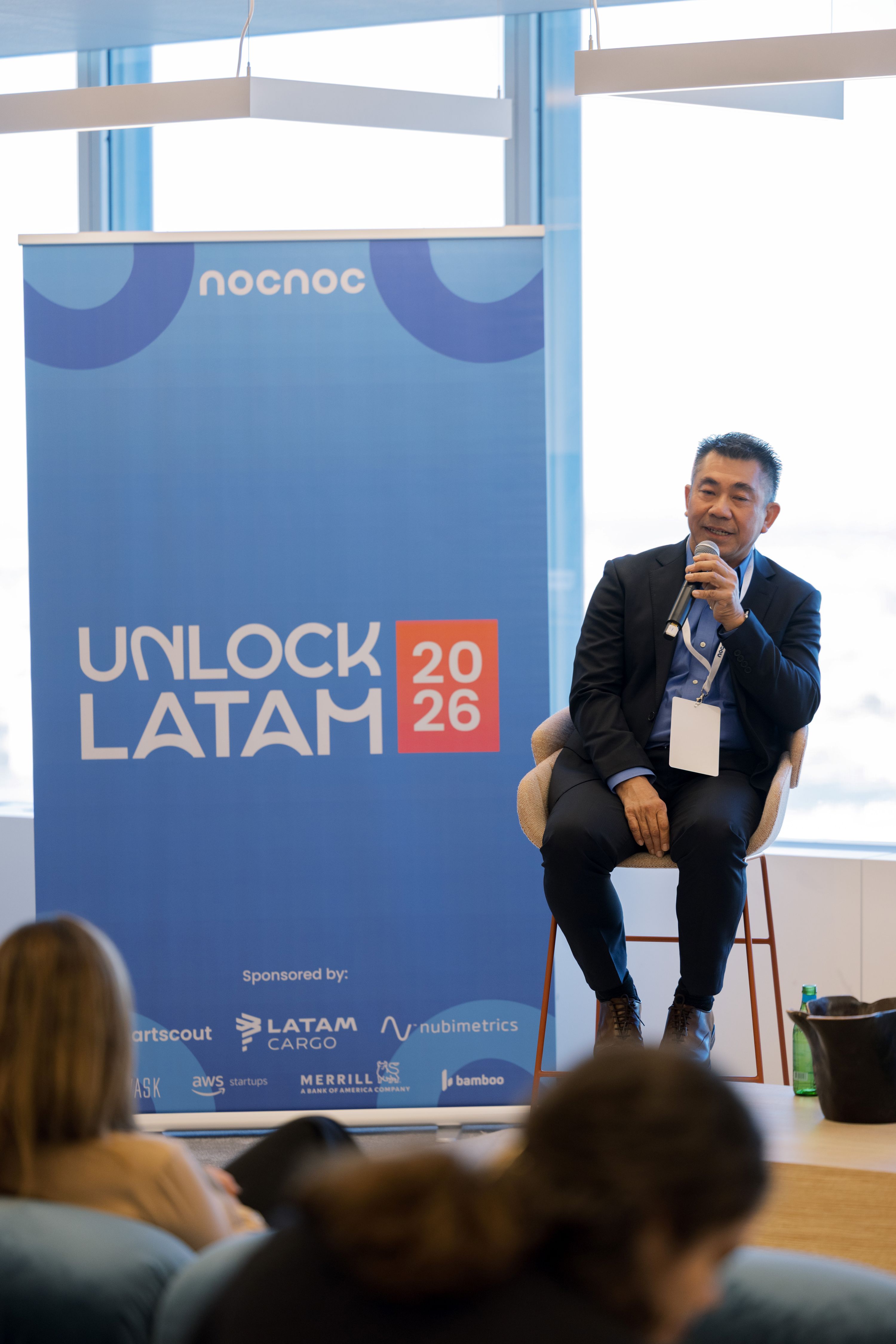
“From our product perspective, the newest, greatest and latest product that we launched — a lot of traffic coming from LatAm. They want to buy. But for some reason, the complexity of the export from the US, the complexity of returns, pre-sales and post-sales, all kinds of issues — we see traffic, but we do not have conversion.” - Anthony Chow, CEO, Newegg
After 25 years watching the region from the sidelines, Newegg's conclusion was that the path forward wasn't to build the localization stack themselves. It was to partner with someone who already had:
“We know how to get the product out from China. We have a platform able to get all the product on our space. But unfortunately, we do not have a key to unlock LatAm for the localization — in terms of logistics, import-export, or anything to do with returns and pre-sales.” - Anthony Chow
That partner-versus-build choice is one every U.S. brand faces. And for most brands, the right answer is to partner first — testing demand, learning the consumer, and earning the right to invest deeper before building infrastructure of your own. The partner ecosystem extends well beyond marketplaces and aggregators. Cross-border logistics is its own discipline, anchored by carriers with decades of regional infrastructure that physically move product from U.S. warehouses to doorsteps in São Paulo or Mexico City. Felipe Caballero, eParcel Director at LATAM Cargo Group — one of the gold sponsors of Unlock LatAm 2026 — framed it from the cargo side:
"Unlock LATAM reinforced that South America represents one of the most exciting growth opportunities in global eCommerce today. For over 90 years, LATAM group has connected the region to the world, and our cargo affiliates are proud to play a key role in helping global brands to reach these consumers. Events like Unlock are invaluable because they bring together the exact ecosystem needed to continue opening Latin America to global trade." — Felipe Caballero, eParcel Director, LATAM Cargo Group
6. Navigating Regulation and Risk in a Volatile Region
If there's one universal truth about Latin American e-commerce, it's that the rules can change in the time it takes to send a WhatsApp message. Mid-panel, Bajarlia received exactly that kind of message:
“As we speak, the prime minister of Brazil tweeted that they are taking out the tax on the Brazilians. This is the level of uncertainty we live with in Latin America.” - Ilan Bajarlia
That moment captured the panel's broader thesis: regulatory and political volatility in LatAm is real, and you have to plan around it — not against it.
“I'm not saying not to take risk in LatAm — I'm an entrepreneur and a builder of LatAm, and I think you should take risk. What I mean is this is truly hard and truly uncertain, and you need to be as prudent and informed as the level of partners you want to have in those places.” - Ilan Bajarlia
The pattern repeats across countries. Bajarlia walked through how Brazil's de minimis rules have already swung once before — first opening up, then tightening to 60% import taxes for fashion to protect domestic producers, then easing again under election pressure. Mexico has gone from very open to much more regulated. Argentina has swung the other way, opening up under a pro-commerce administration. Each shift creates winners and losers on a quarterly basis.
The lesson for U.S. brands: don't put all your eggs in one country. Hedge across multiple LatAm markets. Avoid heavy inventory bets in any single jurisdiction until you've earned the right to make them. And work with operators who have already lived through multiple cycles of regulatory change.
7. The Catalog and Discoverability Problem (and What AI Is Doing About It)
One of the most interesting moments of the panel came from the audience Q&A. A representative from Linguascale — a market intelligence company analyzing product listings across the major LatAm marketplaces — surfaced a structural problem most U.S. sellers don't know they have: large portions of cross-border marketplace inventory remain effectively invisible in local search environments, because there's a real disconnect between how sellers translate their listings and how local buyers actually search. As a result, U.S. brands often have products sitting on marketplaces that nobody can find — and most don't even realize it.
The panelists agreed it's one of the most underappreciated friction points in cross-border commerce — and one where AI is reshaping the playing field fast.
“The catalog thing is one of the most important tech challenges we're seeing. We're seeing it as a great opportunity. There is a huge opportunity of using agentic commerce for matching tags and understanding how to optimize what's the most searched product.” - Ilan Bajarlia
Bajarlia's broader point: brands shouldn't try to figure out which SKUs will work in LatAm by importing inventory and watching what sells. The cheaper, faster way is to test demand through cross-border drop-shipping first — gather real listing-level data, see what converts, and then commit inventory where the signal is strongest.
“It's truly very cheap for doing it — compared to doing market research and importing products and then putting inventory and seeing what you sell. I don't think there is another way that's as efficient and as cheap as drop-shipping for testing the opportunity of certain SKUs.” - Ilan Bajarlia
The Mindset That Separates Winners from Survivors
Toward the end of the panel, Bajarlia summarized why companies that win in Latin America win — and why complacent ones lose:
“You need to be a mindset-level paranoid. Because only the paranoid survive — and that's true. Being in Latin America helps, because the chaos and the emerging-market style of things changing all the time makes you paranoid. Our job is having certainty that nothing will continue to be certain — and we need to adapt and innovate.” - Ilan Bajarlia
For U.S. brands considering LatAm, that's the spirit of the opportunity. The market rewards patience, paranoia, and partnership. It punishes complacency.
What This Means for U.S. Brands Right Now
If you're a U.S. brand reading this in 2026, here's the condensed strategic takeaway from this panel:
- The window is open, but it's closing. Chinese marketplaces are investing aggressively, and the easiest customer-acquisition years in Latin America won't last forever.
- You don't have to be all-in to start. Cross-border drop-shipping models let you test the region with low capital and minimal risk.
- Diversify out of single-channel dependency. Concentration risk in any one U.S. marketplace is real. LatAm is a complementary growth channel, not a substitute.
- Don't pick one country. Hedge across Brazil, Mexico, Argentina, Colombia, and Chile to absorb the regulatory volatility.
- Pick partners that have already survived the cycles. The right partner removes most of the friction in customs, payments, listings, and returns.
- Be paranoid. Iterate constantly. Don't assume anything stays the same. That's the price of the opportunity.
Start Selling in Latin America in Under 48 Hours
nocnoc is the cross-border platform that connects U.S. brands to five high-potential Latin American markets — Mexico, Brazil, Argentina, Colombia, and Chile — across 20+ leading marketplaces, with one connection.
We handle product listings, translations, localized content, customer service, marketing, customs, delivery, and returns, so your team can focus on growth — not logistics.
Start selling across Latin America, and watch the full panel discussion with nocnoc, Newegg, Mercado Libre, and Bloomberg News on YouTube.